
Jun 27, 2026 | by Home Fix Interiors
What Is WPC Material?
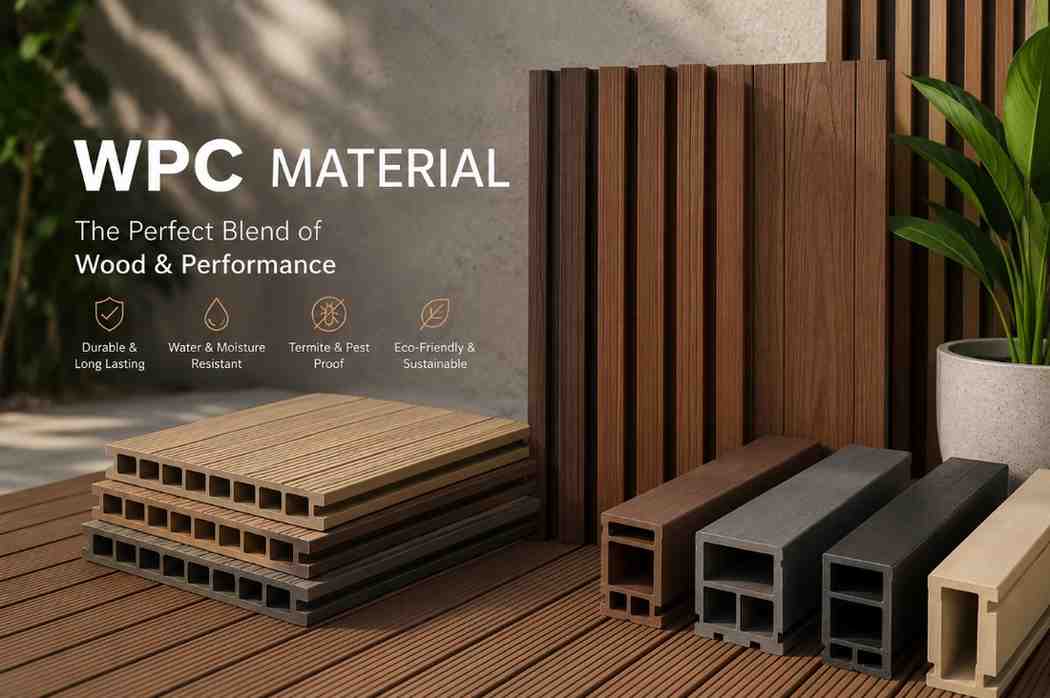
If you’re planning a new home or renovating your interiors, you’ve probably heard people talking about WPC material. Many homeowners ask questions like, What exactly is WPC? Is it better than plywood? Is it waterproof? Can it be used for kitchens and wardrobes?
The simple answer is yes, WPC is one of the most durable and low-maintenance materials available for modern interiors.
WPC (Wood Plastic Composite) is a material made by combining wood fibers (or wood flour) with thermoplastics and special additives. This combination creates a strong board that looks like wood but performs much better in areas exposed to moisture, termites, and everyday wear. A 3-layer WPC (Wood Plastic Composite) board with a 0.7 g/cm³ (0.7) density is a premium, heavy-duty engineered panel engineered for high moisture and load-bearing applications.
Unlike traditional plywood, WPC does not absorb water easily, does not rot, and is naturally resistant to termites. Because of these qualities, it has become a popular choice for modular interiors in homes, apartments, villas, offices, and commercial spaces.
Today, many interior designers and homeowners prefer WPC because it offers durability and reduced maintenance compared to conventional wooden boards. Also many WPC brands offer warranties ranging from 10 to 20 years, making warranty coverage one of the least concerning factors when choosing WPC products. This long-term warranty reflects the product’s durability, reliability, and long-lasting performance.
Where Can WPC Material Be Used?
One of the biggest advantages of WPC is its versatility. It can be used in almost every area of a home where strength and moisture resistance are important.
Common applications include:
- Modular Kitchen Cabinets
- Bedroom Wardrobes
- TV Units
- Bathroom Vanity Cabinets
- Utility Area Storage
- Shoe Racks
- Loft Cabinets
- Dining Unit Storage
- Office Furniture
- Commercial Interiors
- Wall Panels
- Ceiling Applications
- Window Frames
- Door Frames
- Partitions
Because WPC material is waterproof and termite-resistant, it is especially suitable for kitchens, bathrooms, and utility areas where ordinary wood products often face damage over time.
Why WPC Is Different from Traditional Interior Materials
When choosing materials for your interiors, you’ll usually come across options like plywood, MDF, HDF, particle board, PVC boards, and WPC. While all of them serve different purposes, WPC stands out because it combines the strength of wood with the durability of plastic.
In comparison with plywood, WPC does not contain natural wood layers that can swell when exposed to moisture. Unlike MDF or particle board, it does not easily break down when water enters the board. Compared to PVC boards, WPC offers better strength and screw-holding capacity, making it more suitable for furniture and cabinets.
Another major difference is maintenance. Traditional wood-based boards may require extra care to protect them from termites, fungus, or moisture. WPC naturally resists these common problems, making it a practical solution for long-term interior applications.
If your priority is durability with minimal maintenance, WPC is often considered one of the best choices for modern interiors.
Benefits of WPC Material
1. 100% Waterproof
WPC does not absorb water like plywood or MDF, making it ideal for kitchens, bathrooms, and utility spaces.
2. Termite Resistant
While wooden boards, WPC is naturally resistant to termite attacks, helping protect your interiors for years.
3. Long Service Life
WPC maintains its structure for many years without warping, swelling, or rotting under normal conditions.
4. Low Maintenance
It does not require frequent repairs, polishing, or chemical treatments.
5. Strong and Durable
Modern WPC boards provide good strength for modular furniture, wardrobes, storage cabinets, and kitchen units.
6. Eco-Friendly Choice
Many WPC products are manufactured using recycled materials, reducing the use of natural timber.
7. Smooth Surface Finish
The surface works well with laminates, acrylic finishes, PU paint, and decorative finishes.
8. Resistant to Fungus and Moisture
Ideal for humid climates where traditional wood products may deteriorate.
Challenges of WPC Material
Although WPC has many advantages, it’s important to know its limitations.
1. Higher Initial Cost
Quality WPC boards generally cost more than ordinary plywood or particle board. However, the longer lifespan often makes it a better long-term investment.
2. Slightly Heavier
WPC boards can be heavier than some traditional wood panels.
3. Heat Sensitivity
While WPC performs well indoors, continuous exposure to extremely high temperatures should be avoided.
4. Product Quality Varies
Not all WPC boards are manufactured with the same quality standards. Choosing a trusted brand is essential.
Best WPC Material Brands in India
The quality of WPC depends not only on the material itself but also on the manufacturer. Choosing a reputed brand helps ensure better durability, consistent quality, and reliable performance.
Some well-known WPC brands available in India include:
- CenturyPly
- Alstone
- Greenply
- Ecoste
- Floresta
When selecting a WPC board, don’t focus only on price. Check factors such as density, thickness accuracy, screw-holding strength, warranty, certifications, and the manufacturer’s reputation.
A reliable interior company can also guide you in selecting the right WPC board based on your project requirements and budget.
Is WPC Better Than Plywood?
This is one of the most common questions homeowners ask.
The answer depends on where the material will be used.
If your priority is water resistance, termite protection, and long-term durability, WPC is generally the better choice.
If cost is the main concern and the furniture will be installed in dry indoor areas, quality plywood can still perform well.
For kitchens, bathrooms, and utility spaces where moisture is unavoidable, WPC is often considered the more reliable option.
How to Choose Good Quality WPC Material
- Before purchasing WPC boards, consider these factors:
- Buy from a reputed brand.
- Check board density and weight.
- Ensure proper screw-holding strength.
- Look for a smooth, uniform surface.
- Verify the warranty.
- Purchase through a trusted interior company.
Frequently Asked Questions
What is WPC material?
WPC (Wood Plastic Composite) is a combination of wood fibers, plastic polymers, and additives that creates a durable, waterproof, and termite-resistant board used in interior applications.
Is WPC better than plywood?
For areas exposed to moisture, such as kitchens and bathrooms, WPC generally performs better because it resists water and termites more effectively than traditional plywood.
Is WPC waterproof?
Yes. One of the biggest advantages of WPC is its excellent water resistance, making it suitable for wet and humid areas.
Can WPC be used for modular kitchens?
Yes. WPC is widely used for modular kitchen cabinets because it offers durability, moisture resistance, and low maintenance.
Is WPC termite-proof?
WPC is naturally resistant to termites, making it a preferred material for long-lasting interiors.
Is WPC environmentally friendly?
Many WPC products are manufactured using recycled materials, making them a more sustainable option compared to products made entirely from natural timber.
Does WPC require maintenance?
Very little. Regular cleaning is usually enough, and it does not require frequent polishing or chemical treatments.