


These mistakes often happen when decisions are made in a hurry or without expert guidance. Space usage, lighting, furniture size, and storage needs are sometimes overlooked during the early stages. As a result, the house may look attractive but fail to support daily living comfortably. With proper planning and informed choices, these issues can be identified early and corrected before execution, helping create a home that is both functional and visually pleasing.
Feb 03, 2026 | by Home Fix Interiors
Common Interior Design Mistakes to Avoid in Your Home
Interior design plays an important role in how a house looks and feels. When small mistakes are made during planning, comfort and functionality can be affected. Many of these mistakes are common and can be avoided with proper understanding and planning.
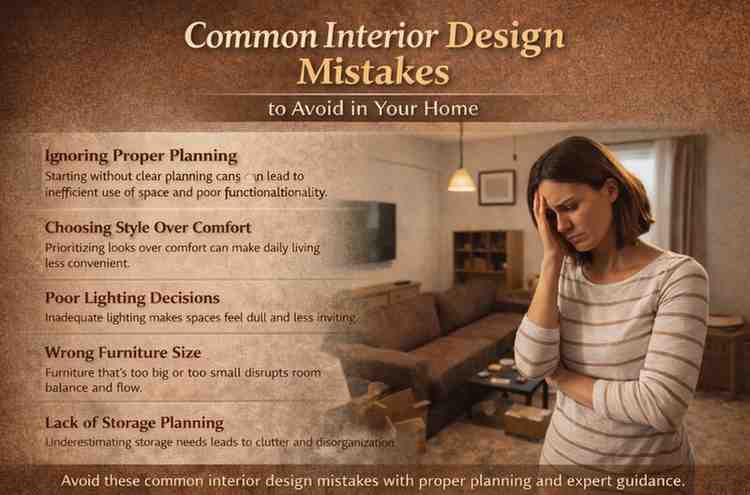
This Interior Design Mistakes You Should Avoid
Avoiding these errors helps create a balanced, practical, and visually appealing interior.
Ignoring Proper Planning
One of the biggest mistakes is starting interior work without clear planning. Room usage, storage needs, and movement space are often not considered properly. Without planning, the interior may look good but fail to function well in daily life.
Choosing Style Over Comfort
Attractive designs are often chosen without thinking about comfort. Furniture that looks good may not always be comfortable or practical. When comfort is ignored, daily living becomes less convenient over time.
Poor Lighting Decisions
Lighting is sometimes treated as a small detail. In reality, poor lighting can make a well-designed space look dull. A mix of natural light and proper artificial lighting should be planned to create a balanced and pleasant atmosphere.
Wrong Furniture Size
Furniture that is too large or too small can disturb the balance of a room. Oversized furniture makes spaces feel cramped, while small furniture may look out of place. Correct measurements should always be taken before selection.
Lack of Storage Planning
Storage needs are often underestimated. Without enough storage, clutter builds up quickly. Well-planned storage helps keep the home organized and visually clean.
Ignoring Material Quality
Low-quality materials may be chosen to reduce costs. Over time, this leads to frequent repairs and replacements. Good-quality materials offer better durability and long-term value.
Not Considering Future Needs
Interiors are sometimes designed only for current needs. Changes in lifestyle, family size, or usage are not considered. Flexible designs help avoid future modification issues.